Introduction
In 2022, the Eileen Fisher Foundation commissioned the HEY FASHION! report, authored by Pentatonic, revealing the magnitude of the fashion industry’s waste crisis and exploring different ways to solve it.
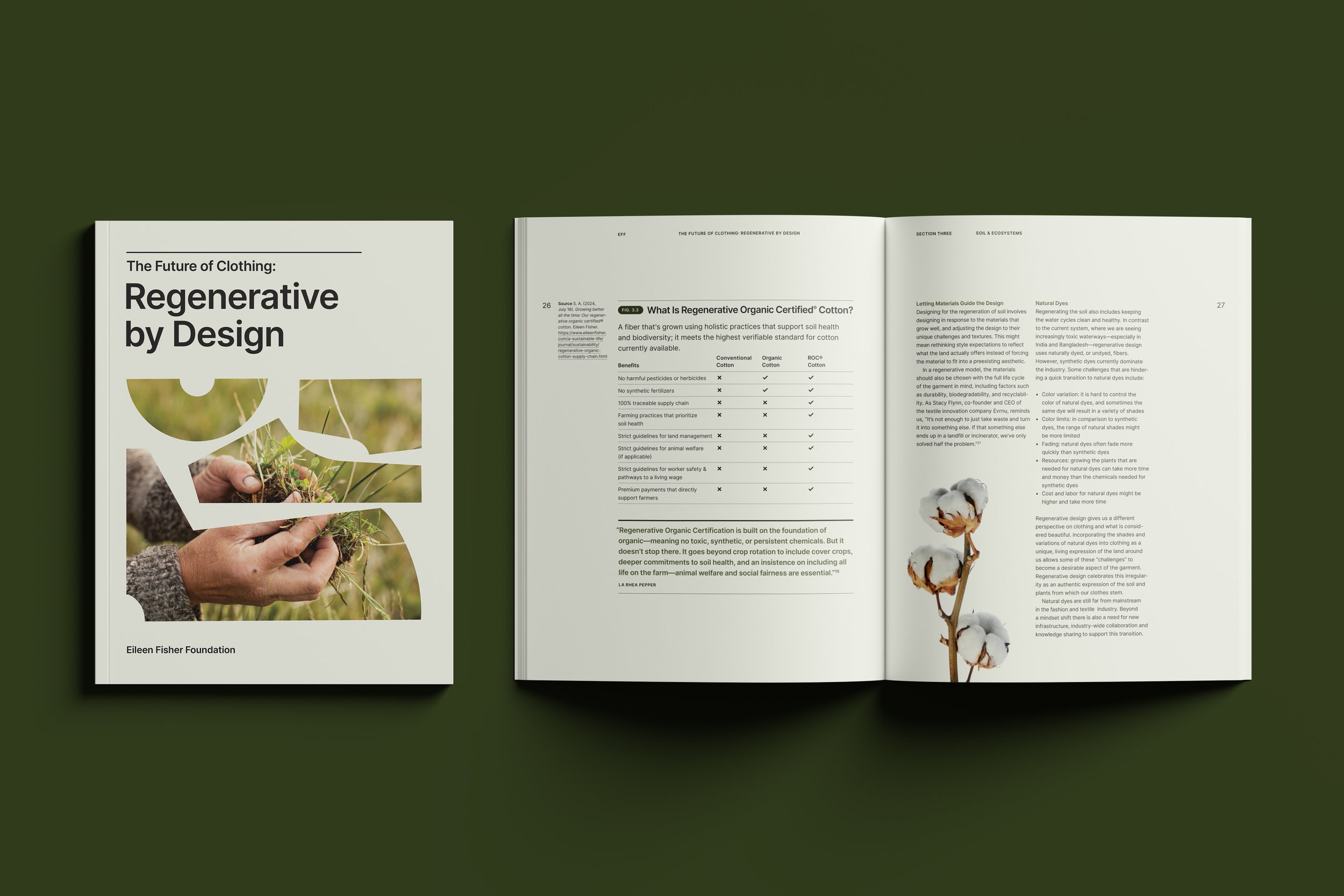
The findings inspired a realization that while circular solutions are vital, they alone cannot solve the crisis if the industry continues to source materials and produce garments that perpetuate a take-make-waste culture. This new report asks the question: How can we stop the problem at the source? We shift focus from a garment’s end-of-life stage to the beginning of its life cycle, reconsidering the origins of the materials we use, the processes we invest in, and the values embedded in supply chains. This is where the term “regenerative” comes in to shift the conversation from minimizing harm to a more ambitious vision: clothing design as a medium for restoring ecosystems, supporting communities, and contributing to a more just and resilient future.
Based on a series of interviews and an extensive literature review, this report identifies four levels of regenerative design that move from the soil to social systems:

In doing so, we resist the use of “regenerative” as a buzzword with which to perpetuate old paradigms and business as usual. Our framework emphasizes that regeneration must move beyond surface-level practices. It must entail a fundamental, whole-systems reorientation that questions dominant economic models and how we understand our own human role in the collective and natural world.
The goal of this report is to spark curiosity and give an overview of opportunities for regenerative design, rather than dictate specific measurable actions. See our list of recommended reading at the end of this report for further comprehensive explorations of regeneration within the fashion industry and beyond.
To the reader The fashion industry is one that touches and involves all of us. Whether you are the CEO of a global clothing brand, a farmer considering regenerative practices, a textile producer, a land steward or someone who believes their life is far removed from the fashion world—we are all participants in this system. We each get dressed every day. Our choices, whether conscious or habitual, ripple through a vast network of social, ecological, and economic relationships. The story of what we wear is also the story of the soil, the hands that grow and sew, and the systems that either deplete or regenerate life. This report invites you to consider clothing not only as a product but as a process—and to imagine how we might reshape that process in service of life.