
Soil & Ecosystems
What Design Decisions Can Regenerate Soil Health?
When brands and designers choose regenerative materials, they choose fibers that revitalize soil thanks to practices such as no-till farming, cover crops and crop rotation, composting, and managed grazing. This healthy, regenerated soil supports carbon sequestration, water retention in drought periods, and, conversely, resilience to flooding—as well as higher yields over time without the reliance on pesticides and insecticides.
Choosing Regenerative Materials
Many farming practices behind materials that are described as innovative in the regenerative agriculture movement are in fact a return to Indigenous methods. This includes intercropping, the method of growing several different kinds of crops together. For example, growing corn, beans, and squash together—known as the “three sisters”—allows them to mutually benefit one another. The beans climb up the stalk of the corn, while the squash leaves spread over the soil, keeping out weeds and pests while allowing moisture to be retained.
Similarly, what has now been popularized under the names “agroforestry,” “permaculture,” and “silvopasture”—various practices of integrating trees, crops, and animals—were practiced by Indigenous communities all over the globe.
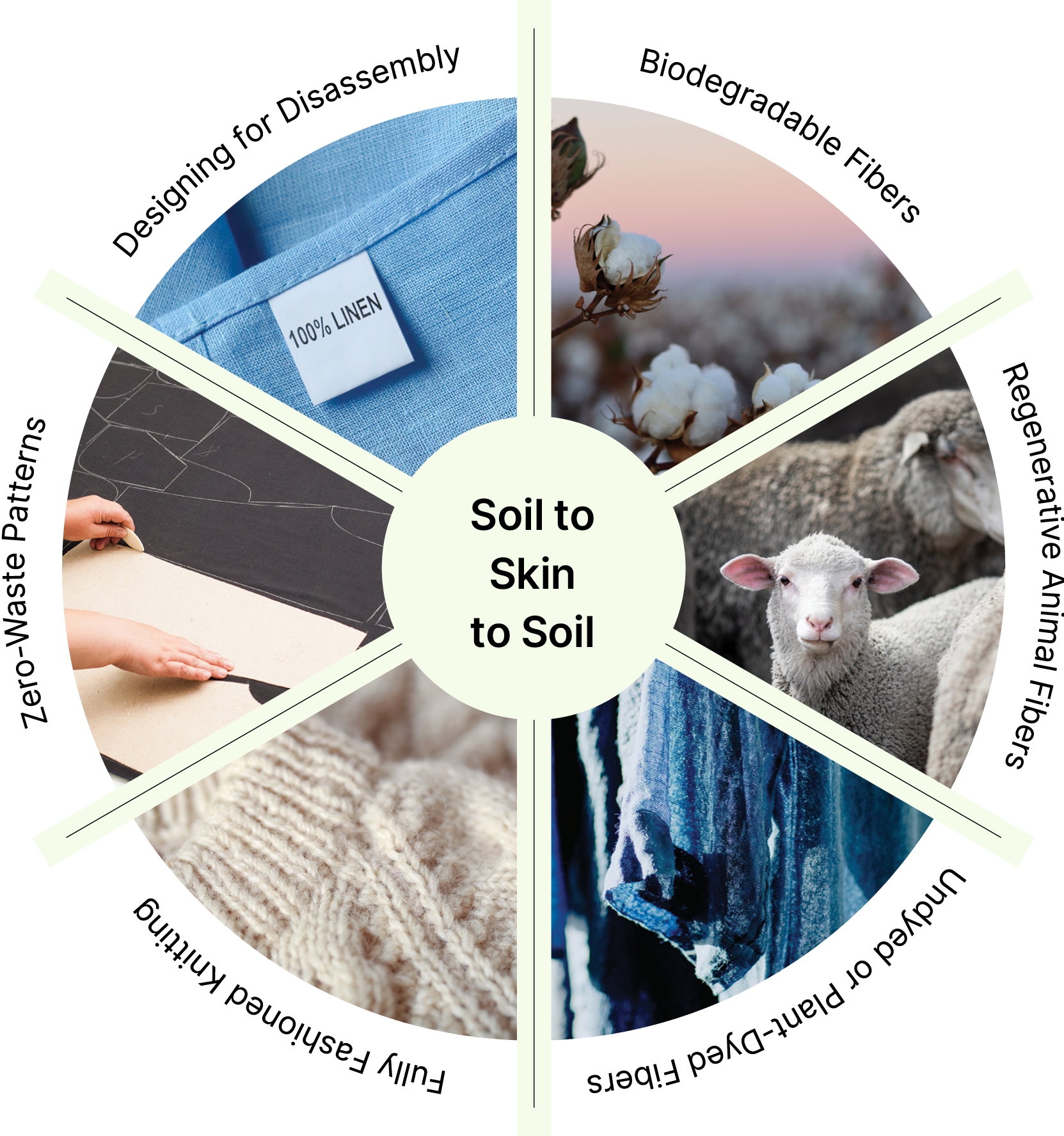
Design Choices That Support Soil Regeneration
Biodegradable fibers including organic cotton and linen
Regenerative animal fibers such as regenerative wool
Undyed or plant-dyed fibers—like indigo for deep blues
Fully fashioned knitting, which does not require cutting or fabric leftovers
Zero-waste patterns and weaving
Designing for disassembly, which allows for an extended lifespan and increased biodegradability
Regenerative Wool
At conventional farms today, sheep have become accustomed to grazing within the safe confines of a fence. In a healthy ecosystem, however, predators would frequent the same area of land and thus bring the sheep into a tight cluster as a protective measure against becoming prey. As they recycle nutrients through manure and urine, this becomes concentrated directly on the affected area, reducing or entirely eliminating the need for fertilizers. Because of the short and intense grazing periods, the grass has more time to regrow which, in turn, nourishes soil biota like worms and allows for more water retention when it rains.²² This method, called management-intensive rotational grazing (MIRG) supports the production of regenerative wool. Unlike industrial wool production, which can overgraze and compact soil, regenerative systems create the conditions for healthier animals, richer biodiversity, and stronger rural economies.²³
“When practiced on degraded land, MIRG brings it back to life. Dried-up springs begin flowing again, brown landscapes turn green, birds and bio-diverse wildlife return, seasonal streams start flowing year-round, and depleted soils recover tilth and depth.”
Charles Eisenstein, Climate: A New Story²⁴
Regenerative Cotton
Cotton is one of the most culturally and economically significant fibers in the global fashion system. According to the US Department of Agriculture (USDA), the US is the third largest cotton producer, and cotton accounts for 25% of global fiber use.²⁵ Conventionally grown cotton is a water- and pesticide-intensive crop. However, initiatives like the Climate Beneficial Verification (CBV) program by Fibershed are showing how cotton can be grown regeneratively by linking measurable environmental impact to sourcing strategies and connecting brands directly with the farmers who grow the fibers.²⁶
Fibershed created a visual representation of what regenerative cotton farming in California might look like, integrating seasonal land stewardship practices, soil-building techniques, and localized textile processing.
What is the relationship between organic and regenerative cotton? Organic sets the baseline by eliminating harmful pesticides, herbicides, and synthetic fertilizers. Regenerative builds upon it.
“Across the United States, a growing network of farmers, mills, and supply chain partners are proving that cotton can be grown and sourced responsibly: regenerating soil, reducing climate risks, and strengthening domestic fiber systems.”²⁶
Fibershed, “Climate Beneficial™ Cotton”
Fibershed’s Vision for Regenerative Cotton
Wet Season As harvested cotton is ginned, cover crops are planted without tilling to grow and feed the soil. The cover crop is terminated once the season ends, and cotton is planted directly into the residue.



Compost Application Compost provides the soil with readily available nutrients and beneficial microbes.
Multi-Species Cover Cropping Diverse and healthy plant roots maximize diverse and healthy soil communities by providing pathways for water, carbon, and other nutrients to enter the soil.
No-Till Planting Seeds are planted without tilling to maintain the soil structure, which is critical for water infiltration, soil function, and preservation of organic carbon.
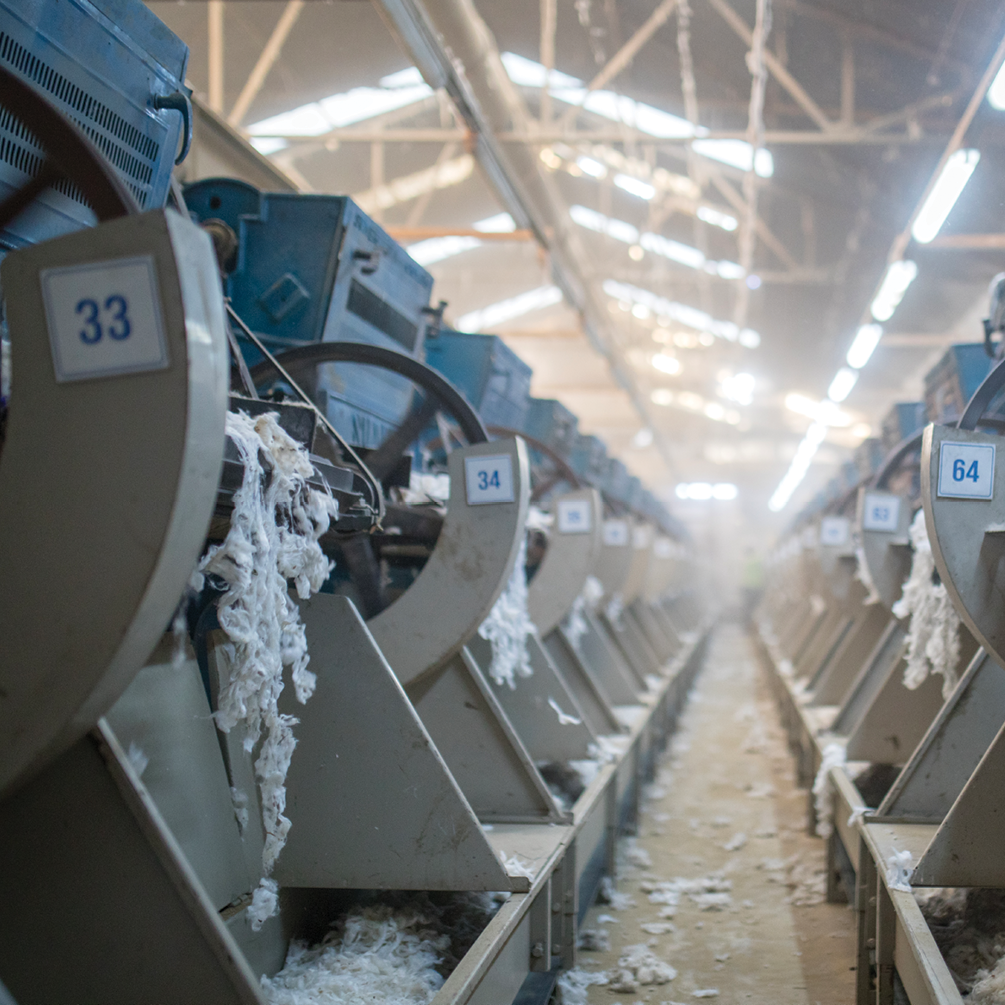
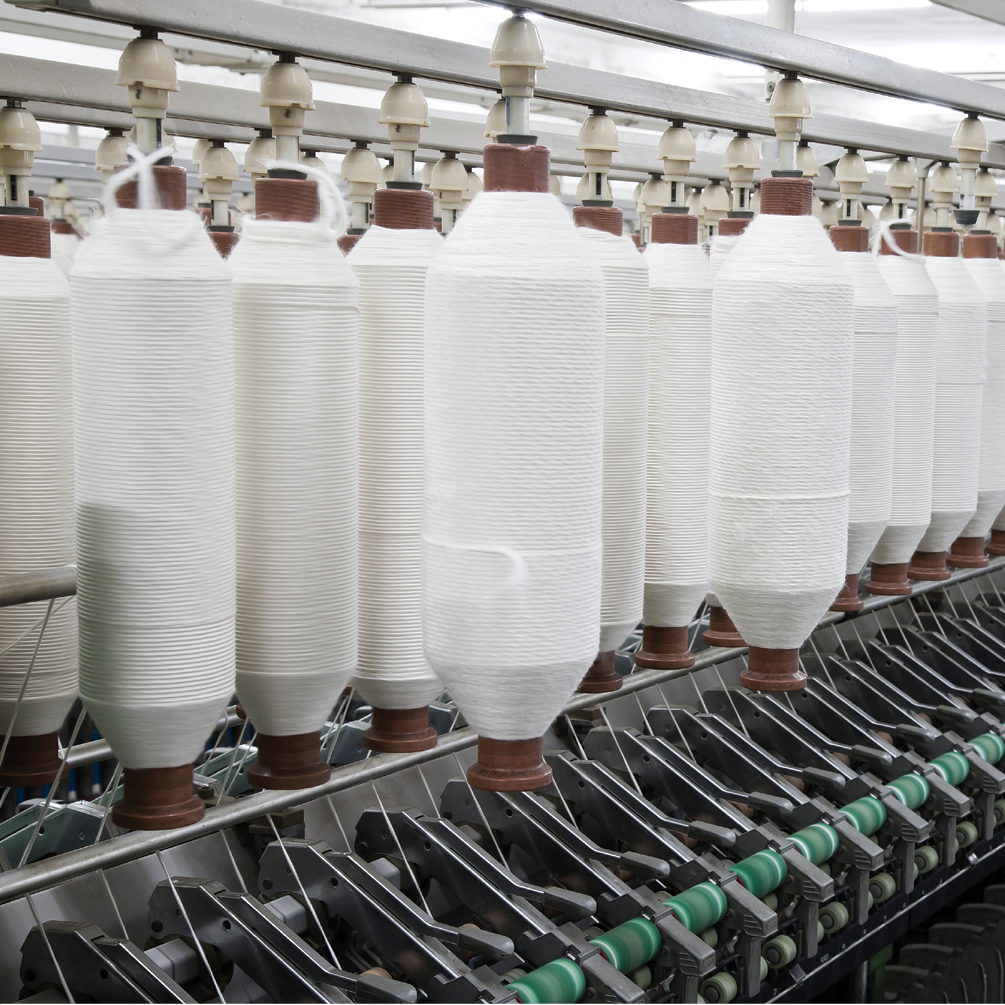
Ginning Workers gin cotton after harvesting to remove the seeds and short fibers.
Spinning Workers card, draft, and spin ginned cotton into yarn.
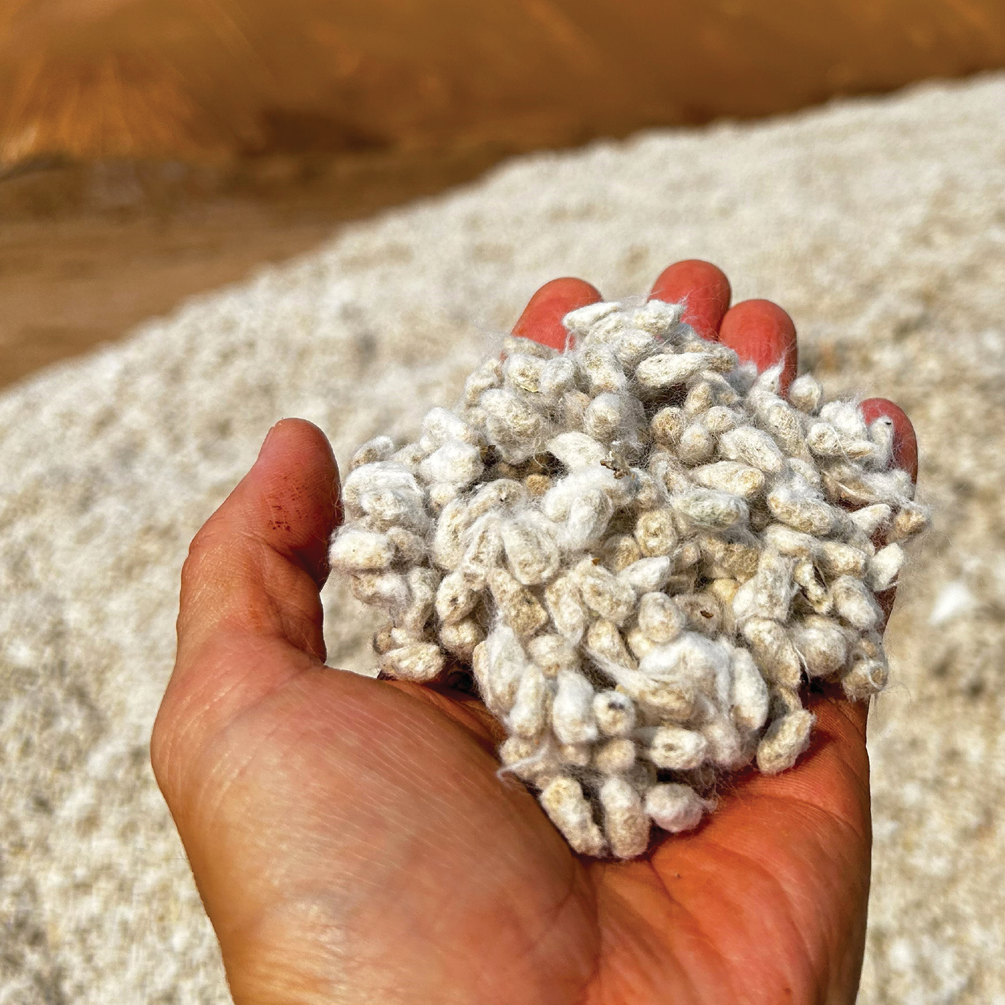
Cattle Feed Seeds from ginned cotton are used for cattle feed.
Dry Season Cotton grows as the field is irrigated and weeds are managed. Cotton bolls develop after irrigation is halted. Before harvesting, the plants’ leaves are removed. Sheep graze the stubble after harvest and prepare the soil for the coming rains.

Maintaining Cover Dead cover crop materials keep the soil covered, maintaining ideal temperatures, reducing evaporation, and minimizing salt build-up in the soil.
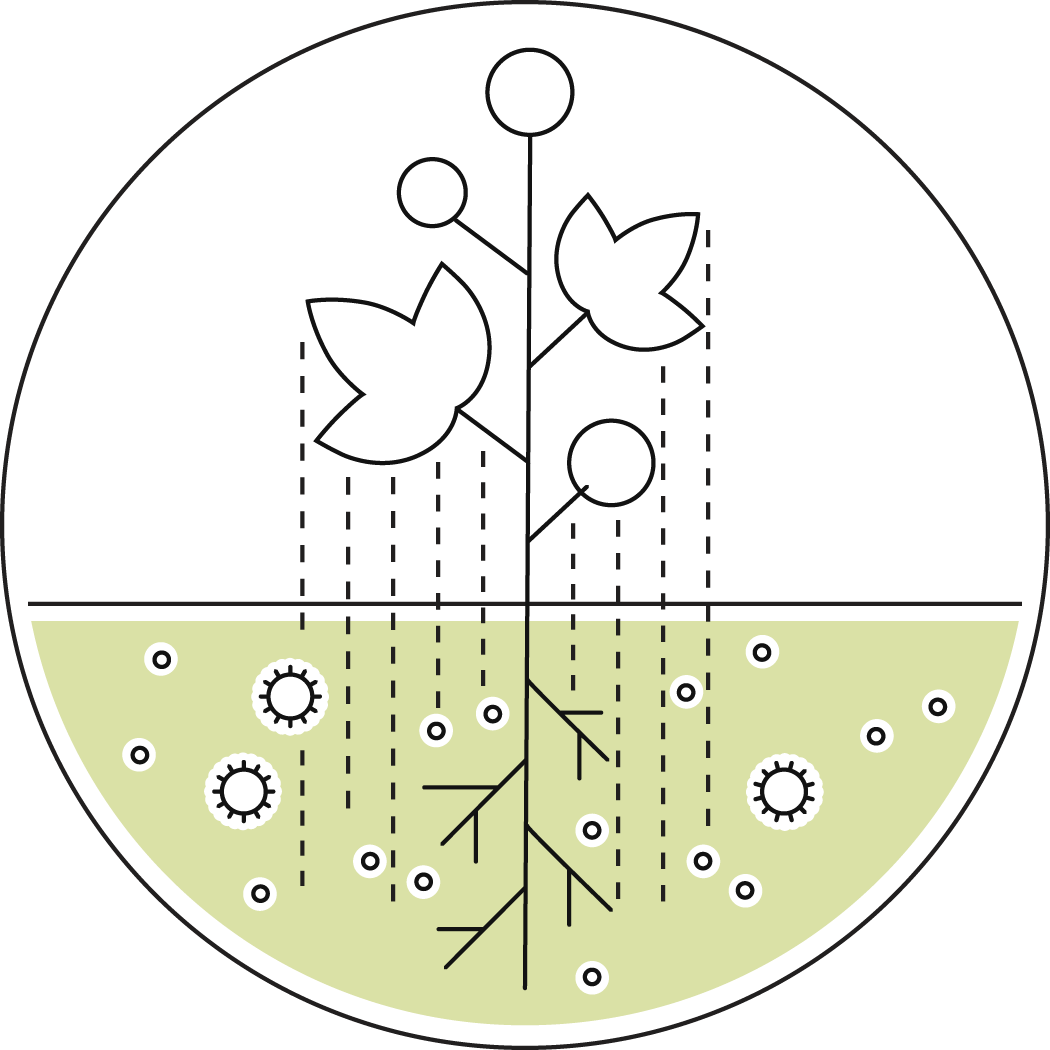
Carbon Sequestration Plants transfer carbon and energy-storing sugars to microorganisms in the soil. This process can address climate change.

Alley Cropping Integrating row crops like cotton and tree crops like mulberry and olive can diversify income, improve production, and increase carbon storage.
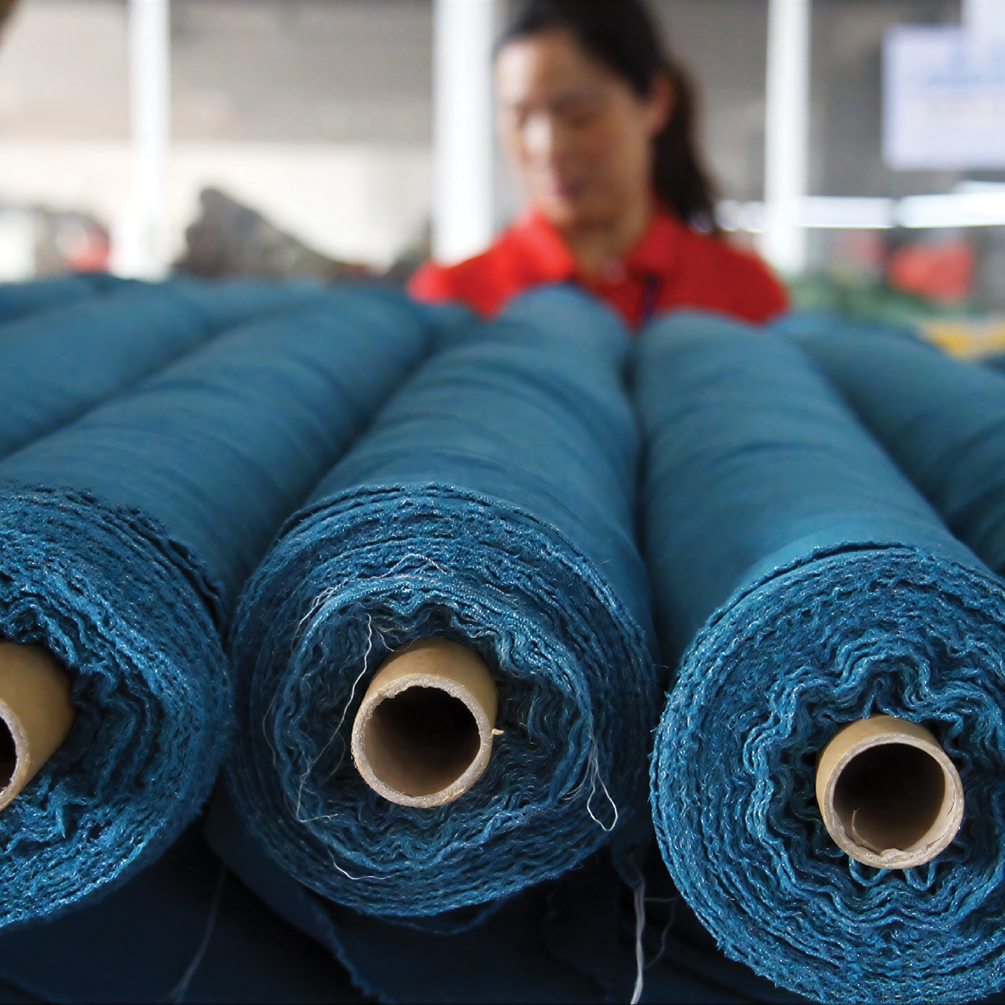
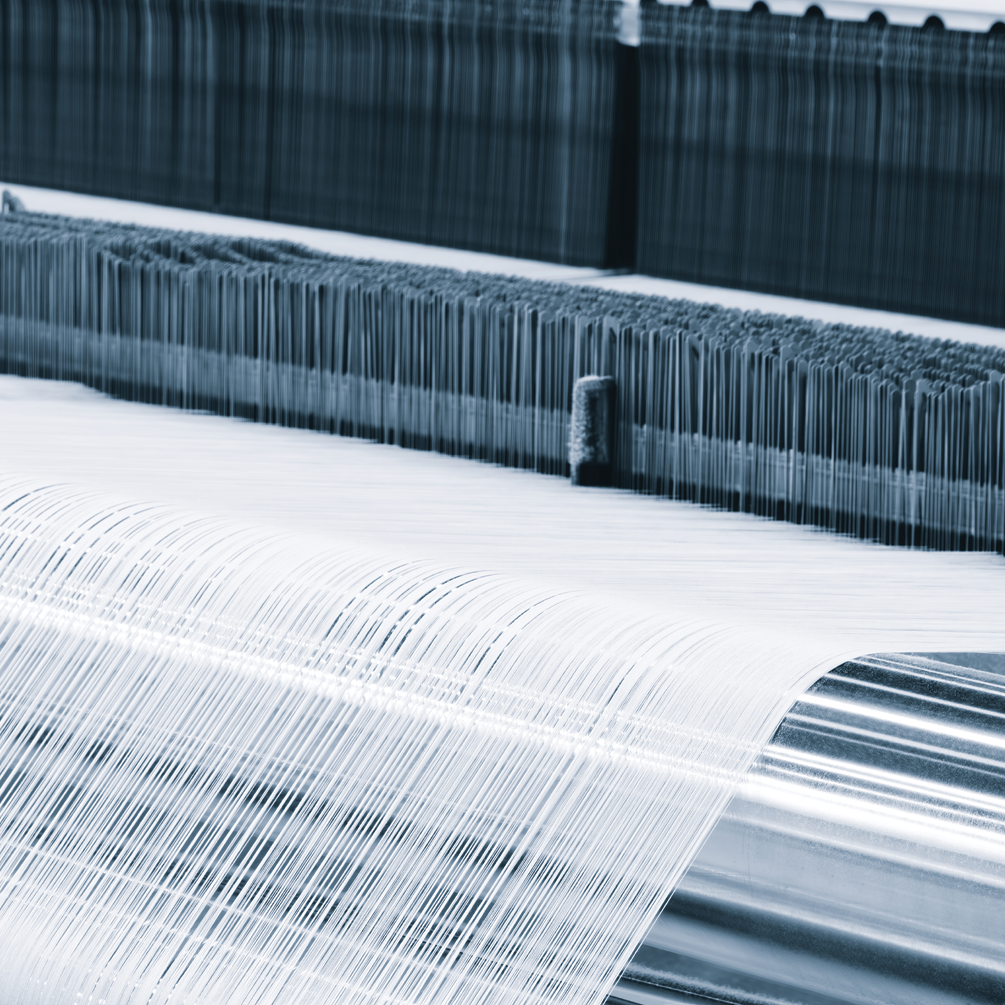
Weaving & Knitting Workers weave or knit yarn into fabric in mills powered with renewable energy.
Dyeing & Finishing Loose fibers, yarns, fabrics, and garments are dyed using natural materials. Wastewater is treated and applied to fields.

Riparian Restoration Restoring river areas supports biodiversity, sequesters carbon, and protects irrigation water from pollution and evaporation.
Interpreted from Fibershed. (2020, December 18). Fiber visions: Cotton. https://fibershed.org/programs/education-advocacy/fiber-visions/cotton/
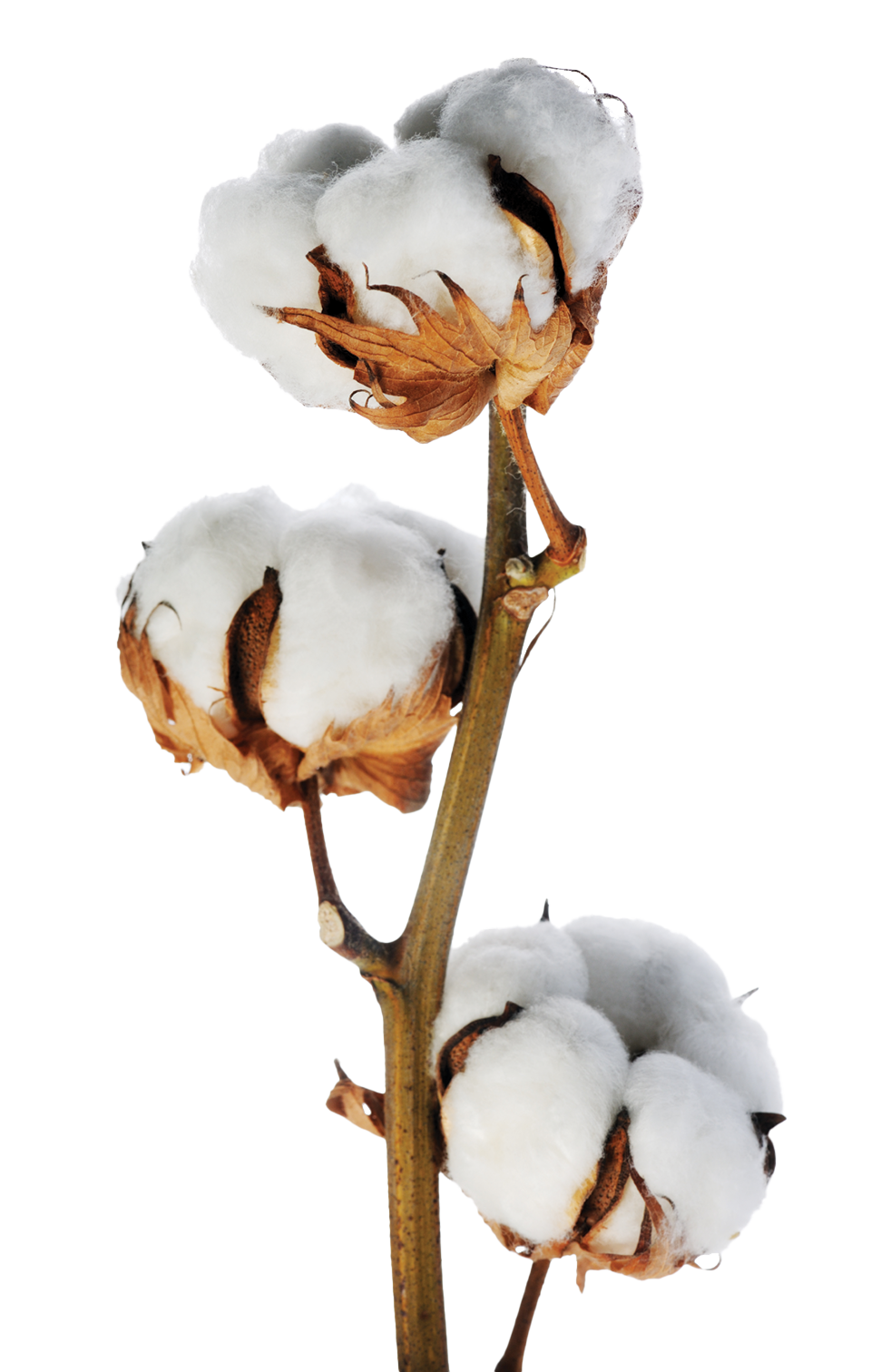
What Is Regenerative Organic Certified® Cotton?
A fiber that's grown using holistic practices that support soil health and biodiversity; it meets the highest verifiable standard for cotton currently available.
| Benefits | Conventional Cotton | Organic Cotton | ROC® Cotton |
|---|---|---|---|
| No harmful pesticides or herbicides | |||
| No synthetic fertilizers | |||
| 100% traceable supply chain | |||
| Farming practices that prioritize soil health | |||
| Strict guidelines for land management | |||
| Strict guidelines for animal welfare (if applicable) | |||
| Strict guidelines for worker safety & pathways to a living wage | |||
| Premium payments that directly support farmers |
Source S. A. (2024, July 16). Growing better all the time: Our regenerative organic certified® cotton. Eileen Fisher. https://www.eileenfisher.com/a-sustainable-life/journal/sustainability/regenerative-organic-cotton-supply-chain.html
“Regenerative Organic Certification is built on the foundation of organic—meaning no toxic, synthetic, or persistent chemicals. But it doesn’t stop there. It goes beyond crop rotation to include cover crops, deeper commitments to soil health, and an insistence on including all life on the farm—animal welfare and social fairness are essential.”¹⁶
La Rhea Pepper
Letting Materials Guide the Design
Designing for the regeneration of soil involves designing in response to the materials that grow well, and adjusting the design to their unique challenges and textures. This might mean rethinking style expectations to reflect what the land actually offers instead of forcing the material to fit into a preexisting aesthetic.
In a regenerative model, the materials should also be chosen with the full life cycle of the garment in mind, including factors such as durability, biodegradability, and recyclability. As Stacy Flynn, co-founder and CEO of the textile innovation company Evrnu, reminds us, “It’s not enough to just take waste and turn it into something else. If that something else ends up in a landfill or incinerator, we’ve only solved half the problem.”²⁷
Natural Dyes
Regenerating the soil also includes keeping the water cycles clean and healthy. In contrast to the current system, where we are seeing increasingly toxic waterways—especially in India and Bangladesh—regenerative design uses naturally dyed, or undyed, fibers. However, synthetic dyes currently dominate the industry. Some challenges that are hindering a quick transition to natural dyes include:
Color variation: it is hard to control the color of natural dyes, and sometimes the same dye will result in a variety of shades
Color limits: in comparison to synthetic dyes, the range of natural shades might be more limited
Fading: natural dyes often fade more quickly than synthetic dyes
Resources: growing the plants that are needed for natural dyes can take more time and money than the chemicals needed for synthetic dyes
Cost and labor for natural dyes might be higher and take more time
Regenerative design gives us a different perspective on clothing and what is considered beautiful. Incorporating the shades and variations of natural dyes into clothing as a unique, living expression of the land around us allows some of these “challenges” to become a desirable aspect of the garment. Regenerative design celebrates this irregularity as an authentic expression of the soil and plants from which our clothes stem.
Natural dyes are still far from mainstream in the fashion and textile industry. Beyond a mindset shift there is also a need for new infrastructure, industry-wide collaboration and knowledge sharing to support this transition.
Regenerative Textiles and Human Health
Textiles are never just materials. They carry histories, relationships, and futures. But what happens when we not only grow and weave regeneratively, but also wear these fibers close to our skin?
Regenerative agriculture helps heal the “skin” of the earth, meaning its soil and water cycles.
When we put natural fibers and dyes onto our own skin, it supports human flourishing as well. On one level, textiles that are grown from regenerated land—like cotton, jute, hemp, ramie, as well as wool from sheep grazing on regenerated grasslands—forego synthetic fertilizers, pesticides, and herbicides during their production. When the textile then lives on our largest organ, our skin, the chance of residual chemicals still remaining in the textile is lower. The European Journal of Physiotherapy and Rehabilitation Studies published an article showing that, due to anti-bacterial and anti-microbial properties, sustainable natural fibers are often hypoallergenic.²⁹ Natural fibers thus ensure better skin compatibility, thermoregulation, and moisture balance for people with sensitive skin or chronic health conditions.²⁹
On another level, wearing regenerative and natural textiles connects us to deeper meaning about ourselves and the land that we come from. As textile artist Mali Mrozinski explains, referencing artist Ann Hamilton, clothing becomes “the second layer of your skin.”³⁰ It not only protects the body, but also resonates with it. Regeneratively grown and dyed materials feel alive: they change, fade, breathe. Wearing these fibers becomes a subtle but powerful act of honoring the life cycles of both body and earth—of participating in a shared regeneration. They remind us that, like our own bodies, they come from the earth and will return to it.
“Our bodies will go into the earth and our textiles too . . . it just seems symbiotic.”³⁰
Mali Mrozinski, Textile Artist
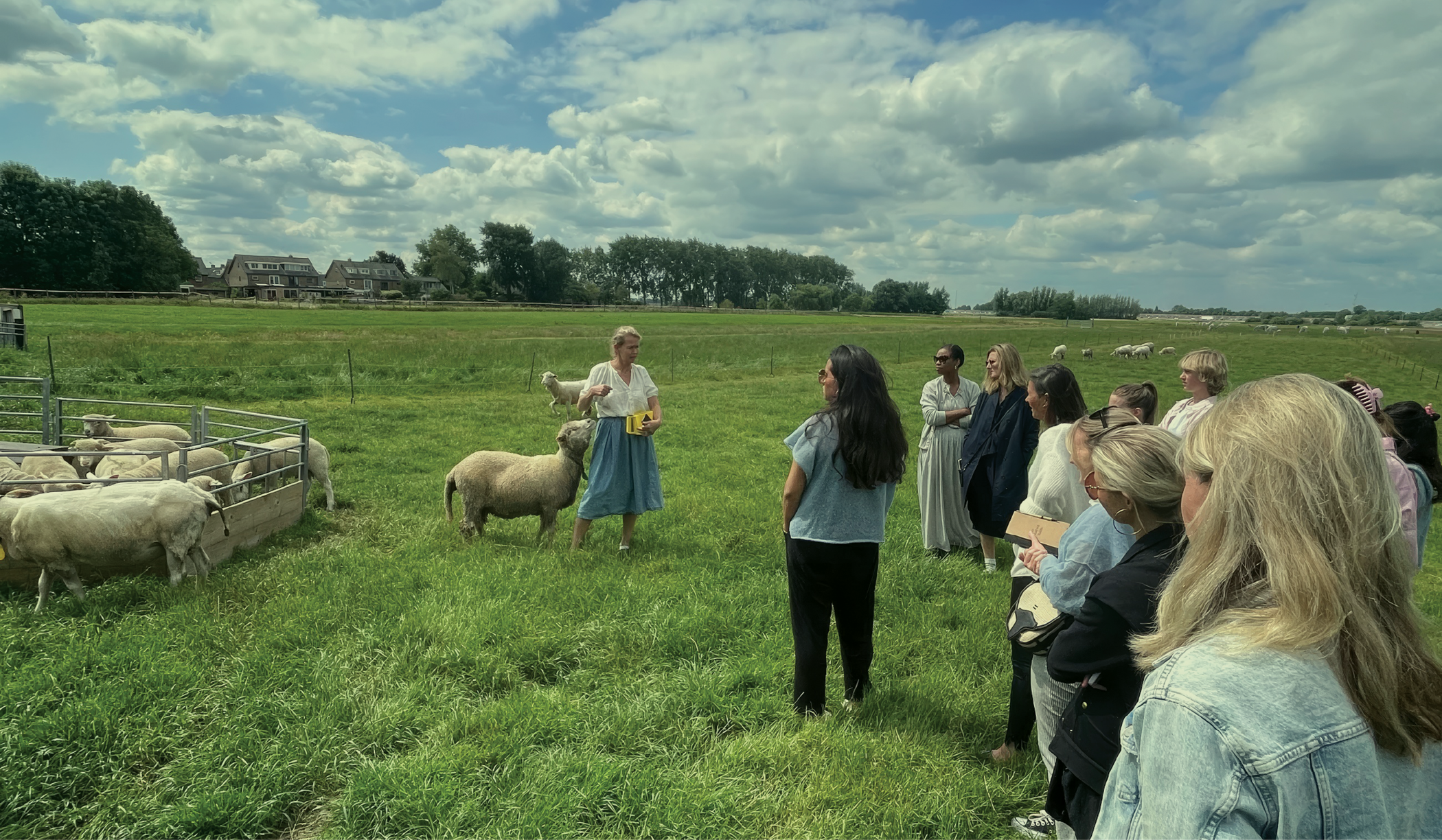
The Knitwit Stable: Fabric-First Design
The Knitwit Stable, an education center, farm, and knitting studio based in the Netherlands, works with wool from both their own sheep and those of local Dutch sheep farmers with whom they have a close relationship.
Reina Ovinge, founder of The Knitwit Stable, notes that Dutch wool can be very coarse, so instead of discarding it, they blend it with softer fibers like alpaca or merino, and design garments that suit its natural character. “It might be a little bit itchy,” she acknowledges, “but then you make a vest or a cardigan, not something you wear directly on the skin. We have to rethink design around what the land gives us.”²⁸
“You have to work with the wool you have, and then start designing from it, instead of seeing something on the catwalk and trying to make it.”²⁸
Reina Ovinge, Founder, The Knitwit Stable

What Design Decisions Can Regenerate Ecosystems?
Beyond soil health, this question asks how design can positively impact the whole ecosystem—including communities, animals, and interspecies relationships—across the supply chain.
Designing for the regeneration of social and ecological ecosystems can look like this:
Honor the roots—learn and understand the history of the regions where fibers are grown and the Indigenous origins of the patterns that inspire design
Bring all voices to the table, including farmers and artisans
Slow down production, which can improve efficiency
Link quality to dignity by creating incentive systems that reward excellence while reducing waste
Design out waste by reimagining uses for byproducts and scraps

Design Choices That Support Ecosystem Regeneration
Supply Chains: From Efficiency to Resiliency
Designing regenerative practices across a supply chain not only benefits ecosystems, it also builds resiliency and ensures companies’ own economic security. In their 2024 report on the costs of climate inaction, the World Economic Forum stated that up to 25% of corporate profits will be at risk by 2050 due to the disruptions of climate change on supply chains and operations.³³
“Supply chains are at the core of a much needed transition to a regenerative business model built for growth and prosperity and aimed at improving the world. Early movers will have an advantage, and companies that fail to shift toward a regenerative supply chain will struggle to sustain performance.”³⁴
Suketu Gandhi, Imran Dassu, et al. “The Time for Supply Chain Regeneration is Now”

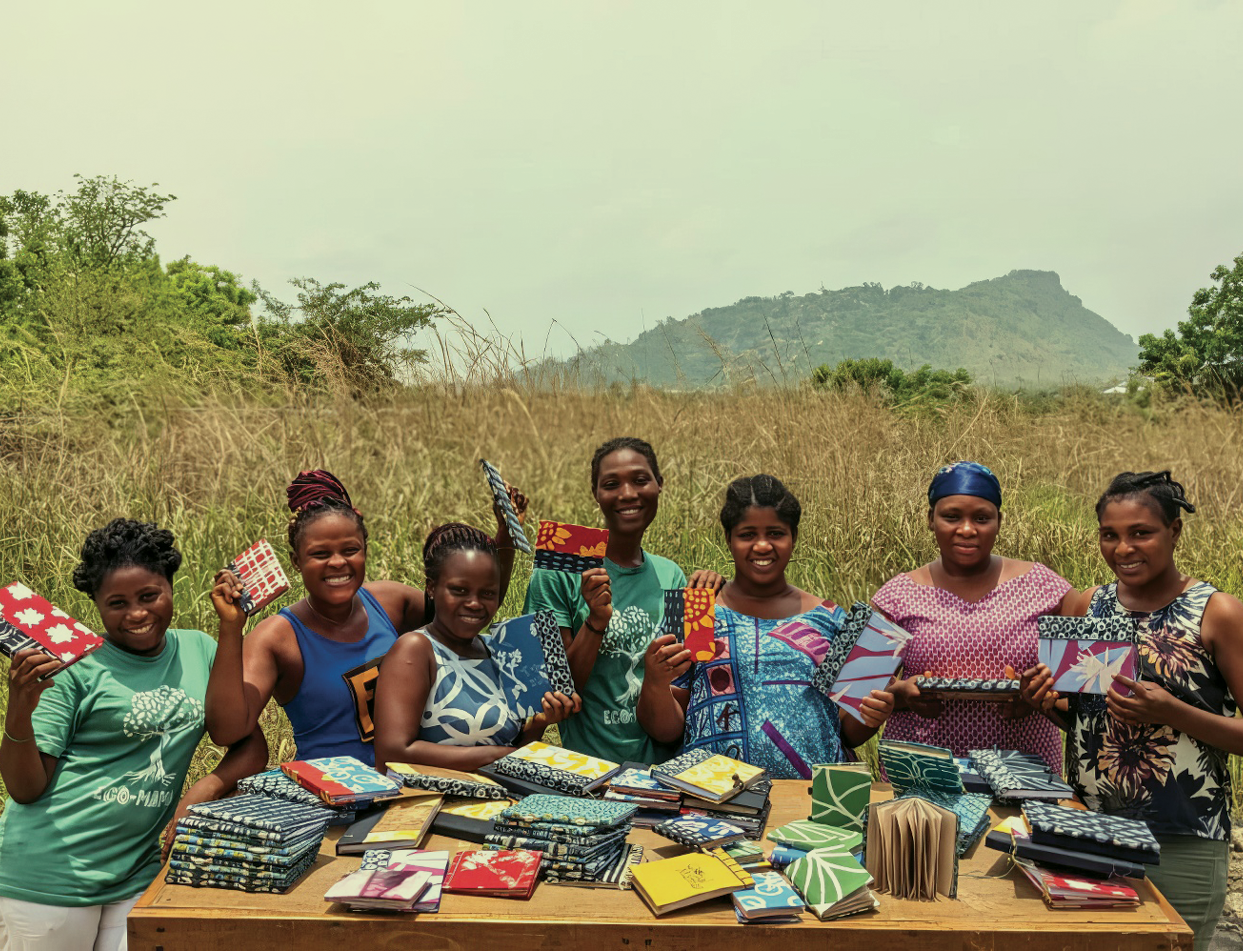
Global Mamas: Regenerating Local Ecosystems
Global Mamas, a woman-led fair trade cooperative based in Ghana, has found several innovative ways through which to regenerate their ecological and social ecosystems. For example, instead of burning extra pieces of cotton, which contributes negatively to air pollution in the community, the smallest scraps are sent to Togo where their NGO partner, Style Her Empowered (SHE), turns them into 100% cotton sanitary pads for girls in villages who are unable to purchase pads themselves.³¹
Global Mamas also designs for regenerating ecosystems through their bonus system. Faced with a 50% rejection rate due to rushed production, they brought together seamstresses with the production, quality, and finance teams to collectively solve this issue. “It was really the mamas [seamstresses and artisans] who came forward with the solution,” Alice Grau, creative director of Global Mamas, recalls. She adds: “They said, ‘If we’re not rushed, we can do our best work and bring you what our organization now call First Class First Time.’”³²
This approach rewards the Global Mamas network with cash bonuses when their garments meet quality standards on the first try. The result? More income, greater independence, and tangible outcomes: “My family, I’m feeding them with my bonus,” one “mama” shared, while another proudly said of her new home, “Yeah, that is my sweat.”³¹
“A ‘me’ problem is a ‘we’ problem. . . . If the decision impacts you, you need to be at the table.”³²
Alice Grau, Creative Director, Global Mamas
What Does a Regenerative and Resilient Supply Chain Look Like?
Supporting Farmers in the Transition to Regenerative Farming
Switching farming methods from conventional to regenerative places an overwhelming burden on the farmers. Brands have the opportunity to play an impactful role when they support farmers—financially and through education—in their transition to regenerative agriculture. Brands that invest in farmers invest in the long term well-being of their company. Unilever, for example, stated that they would have faced a 40% shortage and loss if not for a two-year regenerative agriculture program that they are now actively expanding.³⁵
Decarbonizing Shipping Between Suppliers
The World Economic Forum reported that “reducing carbon emissions is now critical for businesses not just to meet climate goals but also to ensure long-term resilience.”³³ Such changes often require the core operating model to change, including training teams with new skills and increasing collaboration across sectors. Collaboration between brands that share suppliers, as well as with financial institutions, can lead to robust change throughout the industry. McKinsey found that primary data that comes from a direct relationship to the supplier can make up to a 20% difference in emissions.³⁶ Through closer partnerships with suppliers and third-party impact assessors, the brand will also have access to data that will help make the supply chain more transparent.
Investing in the Regeneration of Watersheds
Investing in restoring watersheds can regenerate the diversity of plant and animal species, increase carbon sequestration, and protect raw material growth—in addition to creating long-term financial benefits across the supply chain, from suppliers to local communities.³⁷ Healthy watersheds are also better adapted to face existing climate change threats, such as extreme weather patterns and changes in precipitation.³⁸
Diversifying Suppliers
Partnering with small and medium-sized suppliers at a local level can offer brands competitive advantages such as shorter lead times and more innovative solutions.³⁹ This also aligns with the regenerative value of engaging local and smaller suppliers and investing in systems that circulate value within regional ecosystems. Diversifying production means diversifying the infrastructure as well, which requires investment in innovative technology. As Stacy Flynn, CEO of Evrnu, notes, “Even when we looked at this 10 years ago, I was shocked to find out how little investment is made into the infrastructure of the apparel supply chain—and how reliant it is on 19th century technologies.”²⁷