
Ways of Being & Connection to Place
What Design Decisions Can Regenerate Our Ways of Being?
Design that regenerates our ways of being not only positively transforms the impact of the fashion industry, but seeps into all relationships. Designing for this means creating spaces—for example, educational spaces, labor practices, or ways of connecting with our garments—that have the capacity to change how we see the world.
Regenerating the People Who Make Our Clothes
Fair Trade Certification Regenerative fashion and design takes a holistic view that is rooted in ethical labor practices and empowered communities, and then extends into the whole supply chain, aiming to actively restore and contribute to the health of the ecosystem and the communities that exist within it. Fair Trade is the most recognized ethical label in the world that assesses this intersection, ensuring brands are connected with the people and landscapes behind their products.⁴¹ When a customer purchases a product that is Fair Trade certified, they are supporting:⁴¹
Fair prices and decent working conditions
Environmentally friendly farming methods
A strong voice for farmers and workers
Gender equality and a better future for young people
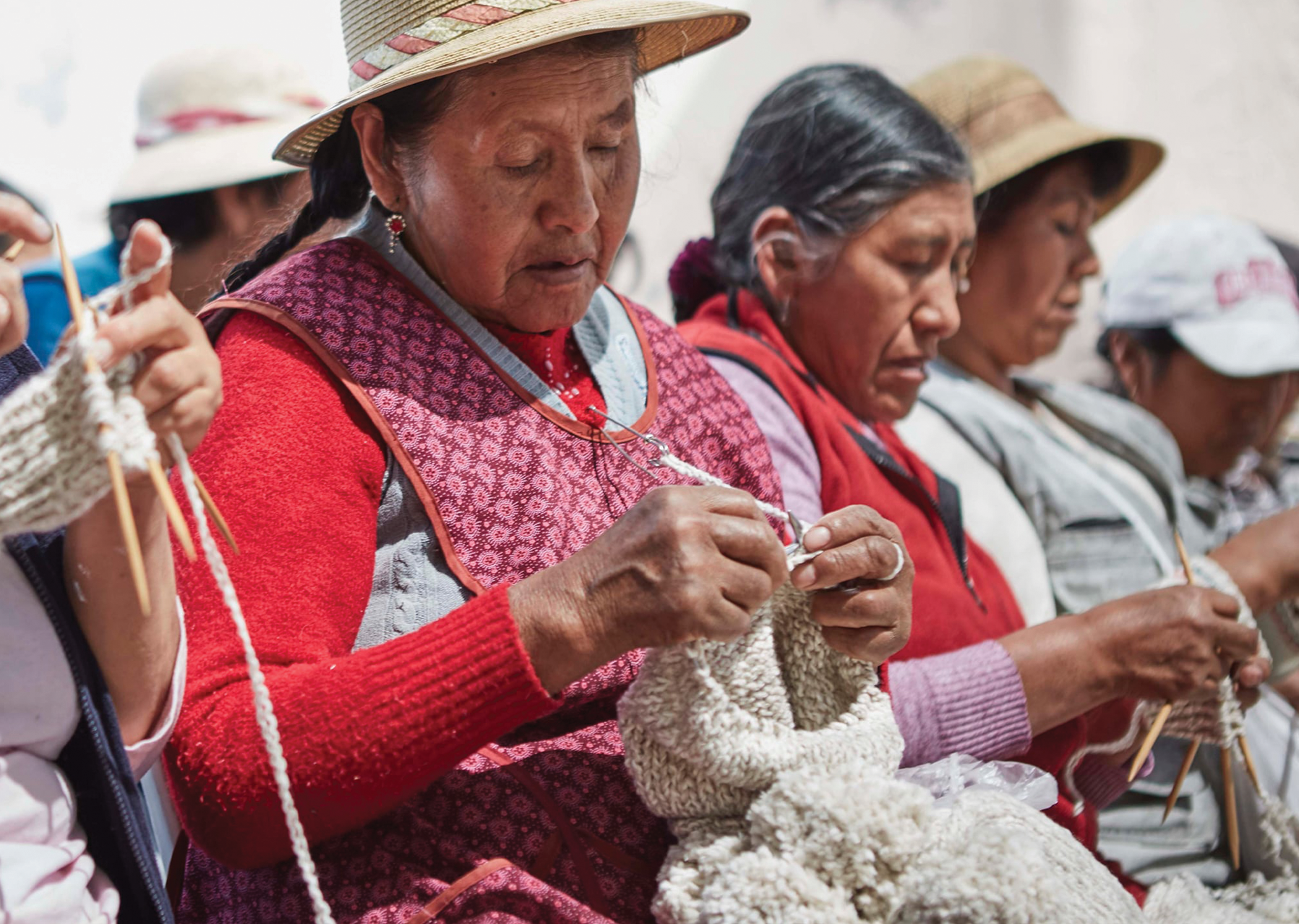
Comparing Fair Trade and regenerative fashion, Jo Salter, regenerative textile advocate and author of a study on ethical fashion, explains, “Fair Trade provides a well-established framework centred around empowering communities, promoting ethical labour practices, and fostering environmental responsibility. Regenerative fashion is an emerging approach that broadens the focus to the entire fashion system, inviting the fashion industry to not only minimize harm but actively contribute to environmental and community restoration. These two approaches are highly integrated.”⁴³ This overlap involves including local artisans and makers in the design process, which helps protect workers’ rights, supports meaningful livelihoods, and upholds the knowledge of skills and traditions that are at risk of being lost in the homogeneity of mass production.
“A design process that actively includes artisans ensures that traditional, local craftsmanship is valued, promoting fair labour practices and preserving cultural heritage.”⁴⁴
Jette Ladiges, “Strength-Based Design in the Textile and Fashion Industry”
In this way, regenerative design has the power to foster social justice and human dignity in the fashion industry. One practice can be to consistently ask the question:
“Are the farmers being paid? Who's getting the money in our program? Many of these programs have huge auditing fees and costs associated to be a part of the program. So really asking: who is this program benefiting and where is this money going?”⁴⁴
Nica Rabinowitz, Climate Beneficial/Fibershed
SEKEM: Designing for Human Flourishing
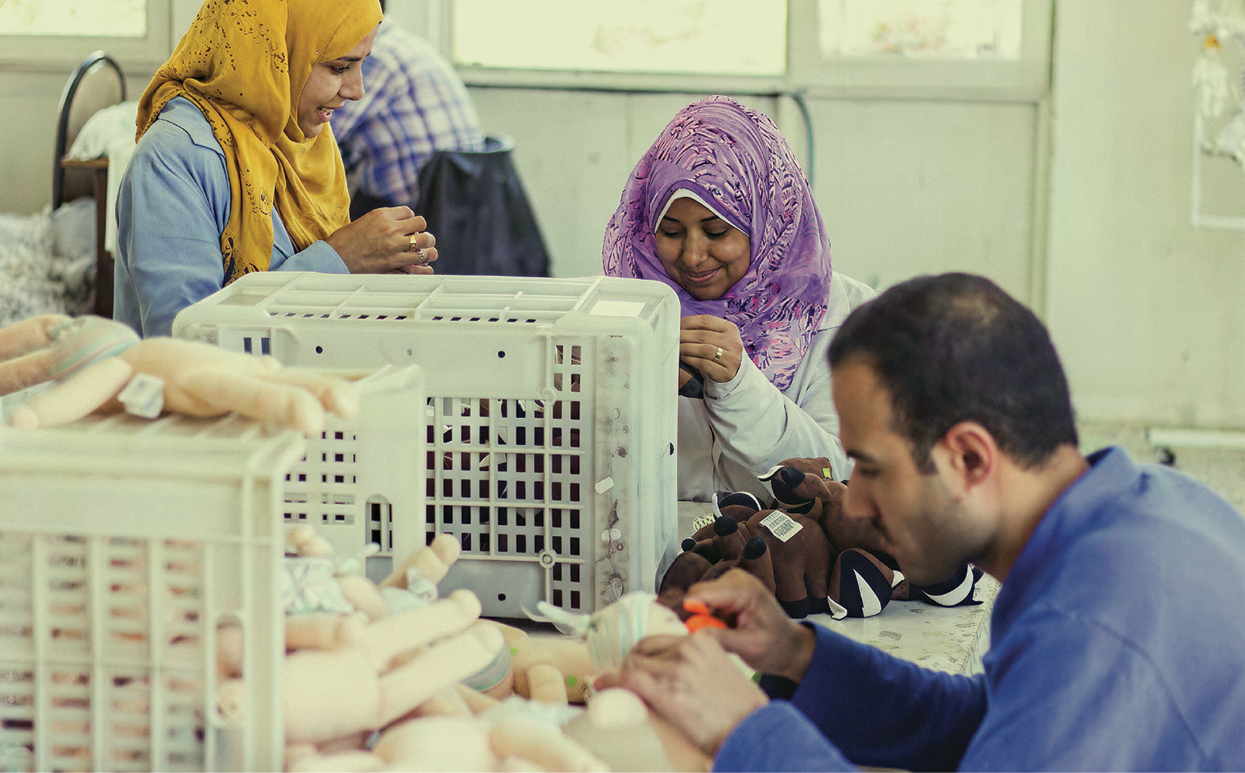
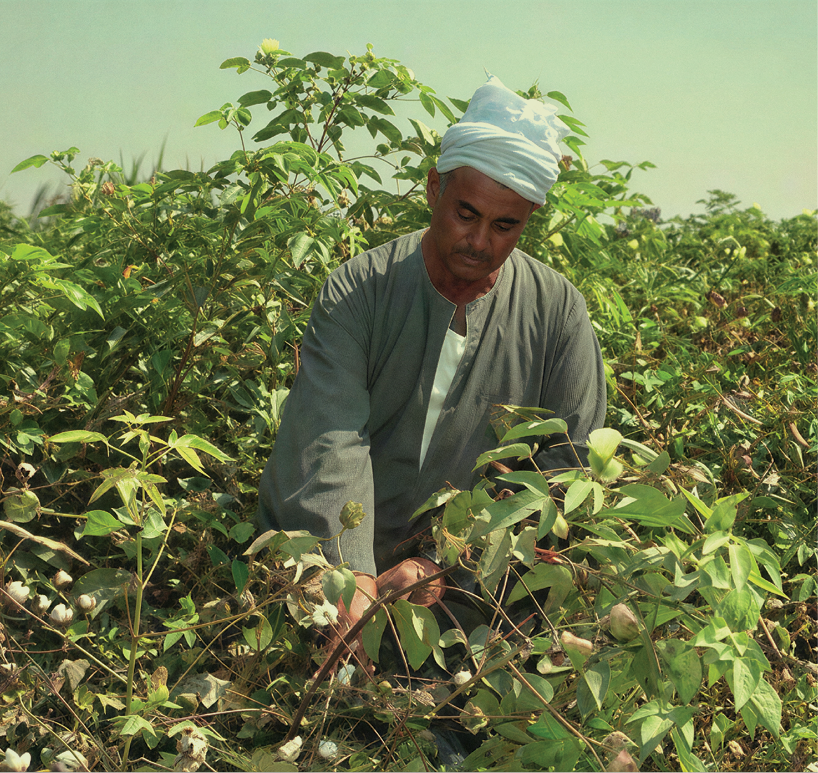
SEKEM, an agricultural and social community in Egypt, embodies a regenerative approach that is not limited to agriculture. Their Economy of Love certification integrates ecological, social, and economic values to ensure dignity at every stage of the value chain. Every part of SEKEM’s ecosystem—from biodynamic farming to community schools, medical clinics, and cultural initiatives—serves a vision of integrated human flourishing. Some key practices include:⁴⁰
Knowledge-sharing as empowerment: Farmers receive training not only in biodynamic, regenerative techniques, but also in marketing, finance, and long-term planning.
Workplace design: NatureTex, which is SEKEM’s textile company, enables rural women—especially mothers—to sew garments and toys from home, earning income while caring for their children. This design supports autonomy, flexibility, and rural livelihoods, all without sacrificing quality due to a structured quality
control system.
Transition pathways rooted in community and fairness: Farmers are supported in switching to regenerative cotton with access to training, financing for solar irrigation, and premium prices. This includes carbon credits through the Economy of Love standard.
Ensuring that ethical labor is financially viable and culturally grounded. Because regeneration means a structural redesign with dignity at its core.
Weaving storytelling, certification, and co-benefits into a visible, traceable narrative.
“It’s not about telling farmers what to do—it’s a dialogue, a curiosity. They are learning from each other.”⁴⁰
Naglaa Ahmed, Social Development Manager, SEKEM
Organizational Culture A regenerative organizational culture acknowledges itself as interconnected with a larger ecosystem and focuses on services and products that benefit society, shifting away from purely profit-driven strategies.⁴⁵ It thrives on purpose-driven leadership, a learning mindset that encourages innovation and experimentation, and open and effective communication of regenerative goals. Businesses that foster this culture are better positioned to thrive in complex and rapidly changing environments.
According to a 2025 study conducted at Harrisburg University, Pennsylvania, a regenerative organizational culture benefits employee well-being as well as the broader market (see figure 4.1).⁴⁶ The study highlights Patagonia as an example, noting that, “By clearly articulating its mission and embedding regenerative values into its operations, Patagonia has cultivated a loyal customer base and an engaged workforce. This example demonstrates that a strong sense of orientation not only enhances organizational resilience but also drives innovation and competitive advantage.”⁴⁶
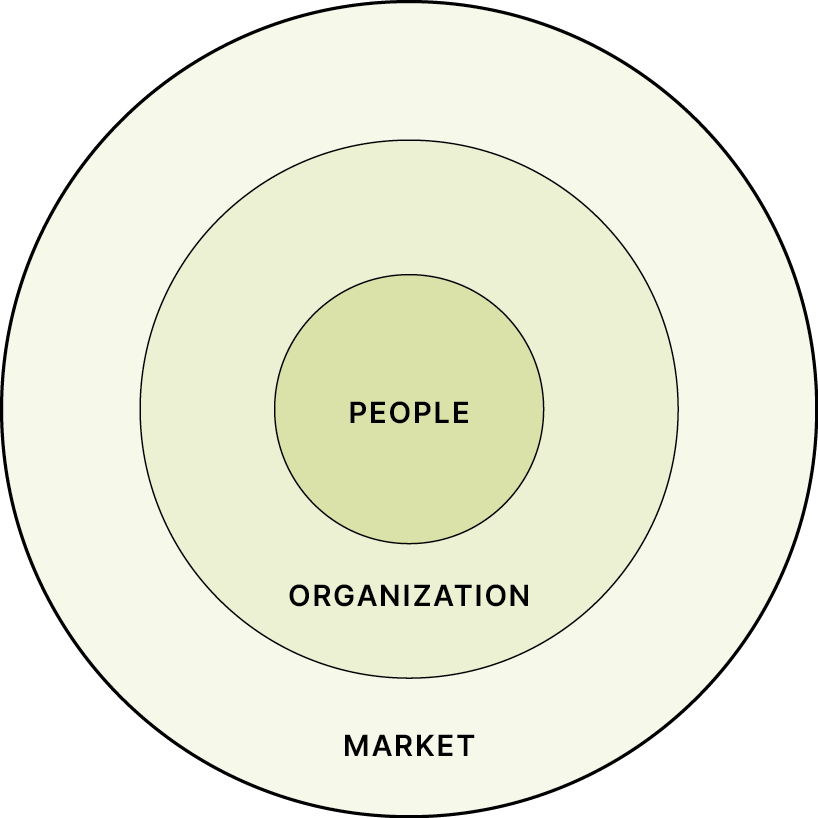
Regeneration at the Workplace
People
Supporting employee well-being and reducing turnover
Higher employee engagement, innovation and profitability
Improving collaboration across departments
Creating resilient teams that can navigate uncertainty
Organization
Increased agility in decision-making processes
Adaptability to market disruptions
Sustainable growth in a world with finite resources
Market
Building stakeholder trust
Aligning with purpose-driven markets
Long-term competitiveness
Source Nagfernandes, S., & Mowery, J. (2025). Creating a regenerative organizational culture. Beyond the Project Horizon: Journal of the Center for Project Management Innovation, 2(1). https://doi.org/10.59964/2993-2556.1020
“In many (if not all) landscapes of the world, discovering the history of the peoples will uncover painful stories of colonization, oppression, and sometimes, genocide. Starting in level three, Regenerative Agriculture practitioners have an opportunity and responsibility to learn, grieve, and seek to reconcile history’s deep socio-cultural footprint with the next generation of farming.”
Ethan Roland Soloviev and Gregory Landua, “Levels of Regenerative Agriculture”¹¹
The Role of Decolonization in Fiber Production
Part of systemic change includes acknowledging that the contemporary apparel industry is rooted in colonial systems that perpetuate overproduction and the exploitation of labor and the environment—and that these practices are largely responsible for the current crisis in the fashion industry.
India’s cotton industry, for example, which is the oldest in the world, was forever changed by the arrival of colonialism.⁴⁷ For several millennia until the nineteenth century, India was a leader in cultivating cotton and manufacturing textiles, which were exported as finished goods across much of the world.⁴⁸ According to Marco Polo, India produced “the finest and most beautiful cottons that are to be found in any part of the world.”⁴⁸ It was a source of pride, and weavers had ownership of their tools, who they sold their products to, and their prices.⁴⁹ However, beginning in the seventeenth century, the British East India Company transformed the cotton trade, turning cotton into a global commodity⁵⁰ and helping in the creation of tariffs and excise duties that discriminated against Indian cloth producers—shifting the market share of British cloth in India from 11.5% in 1850 to 60% by 1880.⁴⁹ This loop—in which raw cotton was farmed in British colonies, turned into textiles in England, and sold back into its colonies—exemplifies the multiple ways in which the system extracted value from colonies like India to enrich the colonial power. Khadi cotton, which is handspun and handwoven cloth, became a symbol of hope that India may regain swaraj (self-reliance) after centuries under British rule.⁴⁹
Today, India is still the world's leading cotton producer and continues to be negatively impacted by the legacy of colonialism.⁵¹ In 2002, genetically modified Bt cotton was introduced—requiring farmers to buy expensive seeds yearly rather than reuse seeds—and within one decade became around 95% of India’s cotton production.⁴⁹ This type of cotton also requires expensive pesticides and insecticides, trapping farmers in a cycle of rising costs as the pests become resistant, requiring them to purchase more chemicals while prices for their cotton decrease.⁴⁹
Moving toward a more regenerative framework in the fashion industry crucially involves recentering Indigenous systems of fiber production and confronting the colonial structures that continue to erase, marginalize, or commodify them.
While the topic of decolonizing fiber production deserves a body of work in itself, these are some questions and principles that can help guide this effort:
Are we giving credit to Indigenous and traditional knowledge systems that fostered these principles for hundreds of years?
How can we redistribute power and profit in fashion supply chains?
What does it look like to replace colonial-era systems of extraction, exploitation, and environmental degradation with models rooted in Indigenous stewardship?
How can we foster authentic partnerships that value Indigenous voices?
Tula: Reviving Indigenous Cotton Farming
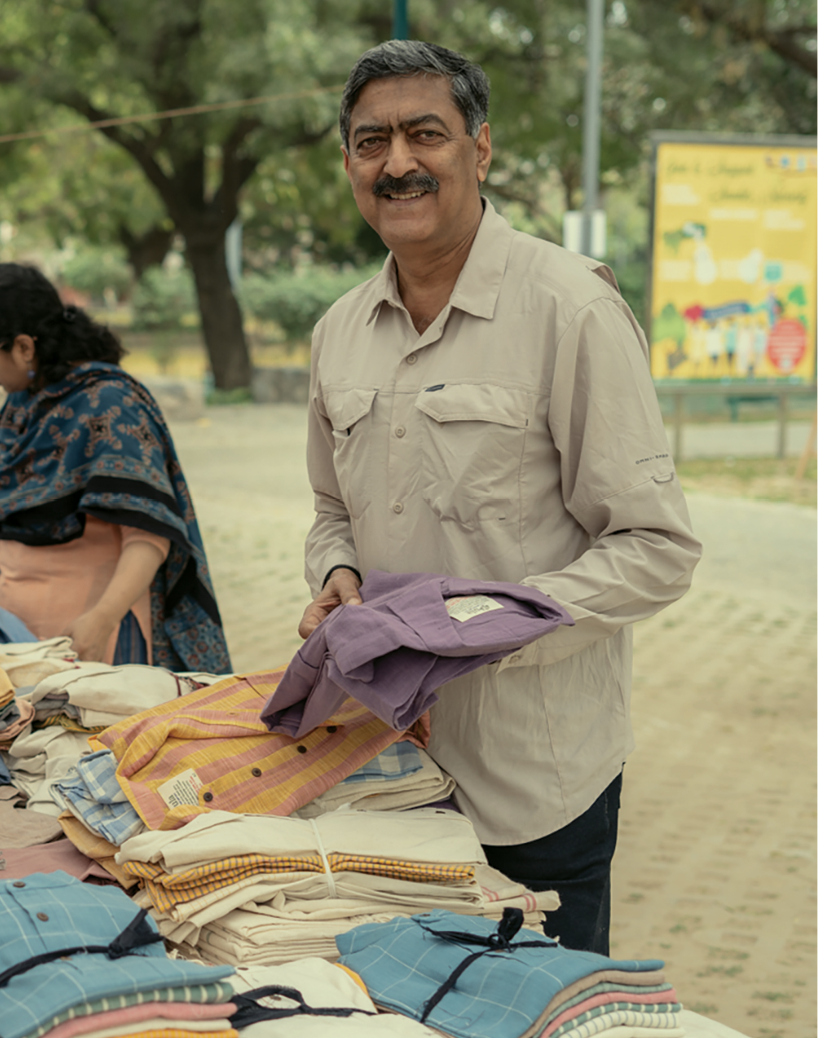
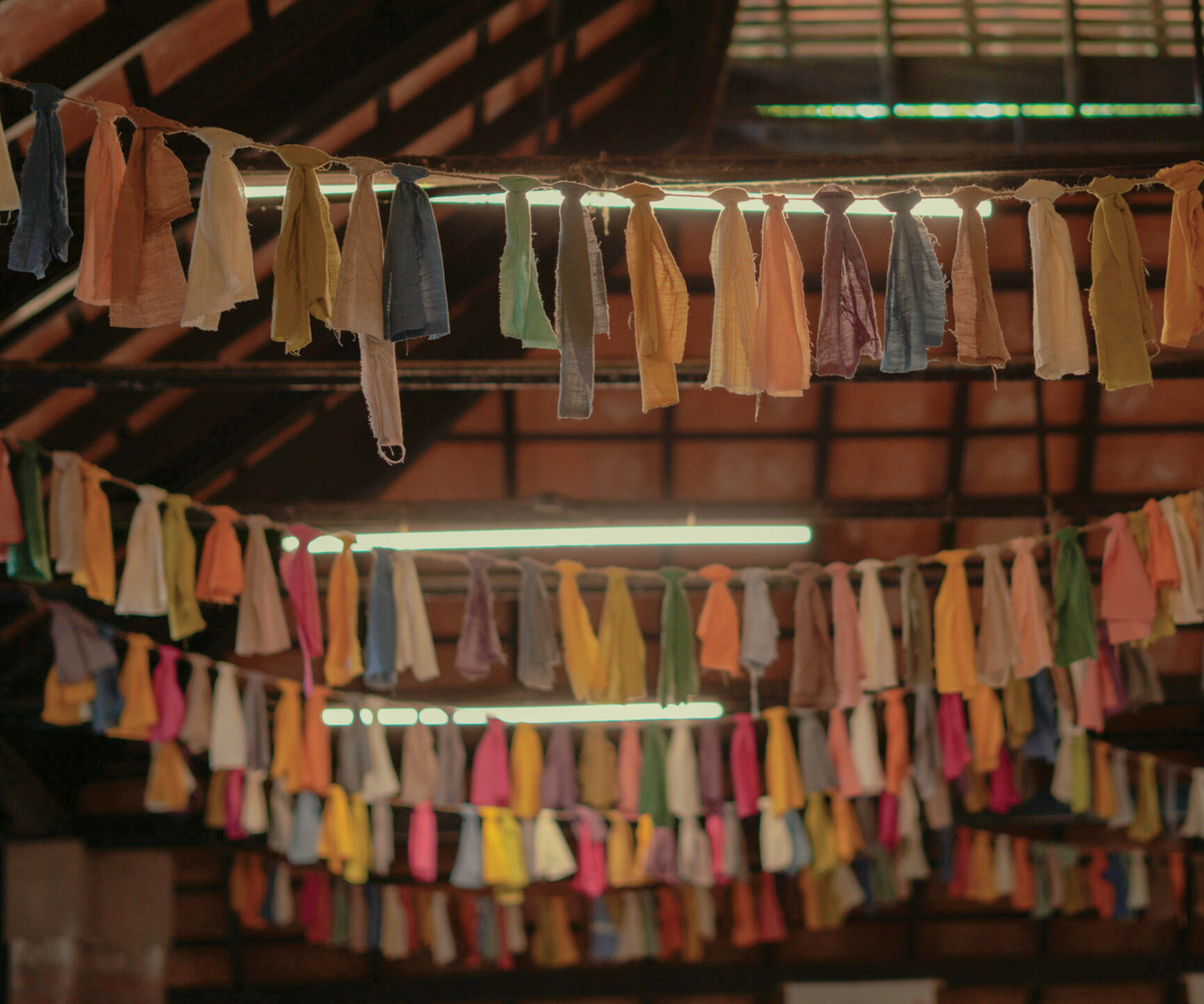
Tula—which in Sanskrit means both cotton and balance or equilibrium—is a community-led nonprofit reviving Indigenous, regenerative farming and handmade khadi cotton traditions.⁴⁹ It emerged as a response to an alarming increase in suicide rates among Indian cotton farmers, often by drinking the pesticides used on their cotton.⁴⁹ Tula asks local farmers to grow cotton species using regenerative farming methods and pays them a liveable wage—50% more than the current market price of genetically modified Bt cotton—supporting the revival of regenerative, post-colonial cotton production that helps restore the dignity, autonomy, and cultural significance of cotton.⁴⁹
Moving up the supply chain, Tula is committed to reviving Indigenous weaving traditions by establishing dignified wages and working hours. Despite requests, Tula has decided against exporting their fabrics internationally.⁴⁹ Instead, they choose to sell only where customers can speak with Tula volunteers in order to foster education and support the local economy. Every Tula garment is made entirely within a 250-mile radius in South India—from organic cotton cultivation to spinning, dyeing, and weaving—using hand tools, natural dyes, and minimal mechanization.⁴⁹ Remnants of the dyeing process, like water, are then redistributed on the local farmland, thus closing the circle.⁴⁹ For Tula, success would be 500 similar initiatives across the world, each tailored to their own local communities and landscapes.⁴⁹
“Here is the question we must at last confront: Is land merely a source of belongings, or is it the source of our most profound sense of belonging? We can choose.”⁵²
Robin Wall Kimmerer, “Greed Does Not Have to Define Our Relationship to Land”
How Can Design Decisions Regenerate Our Connection to Place?
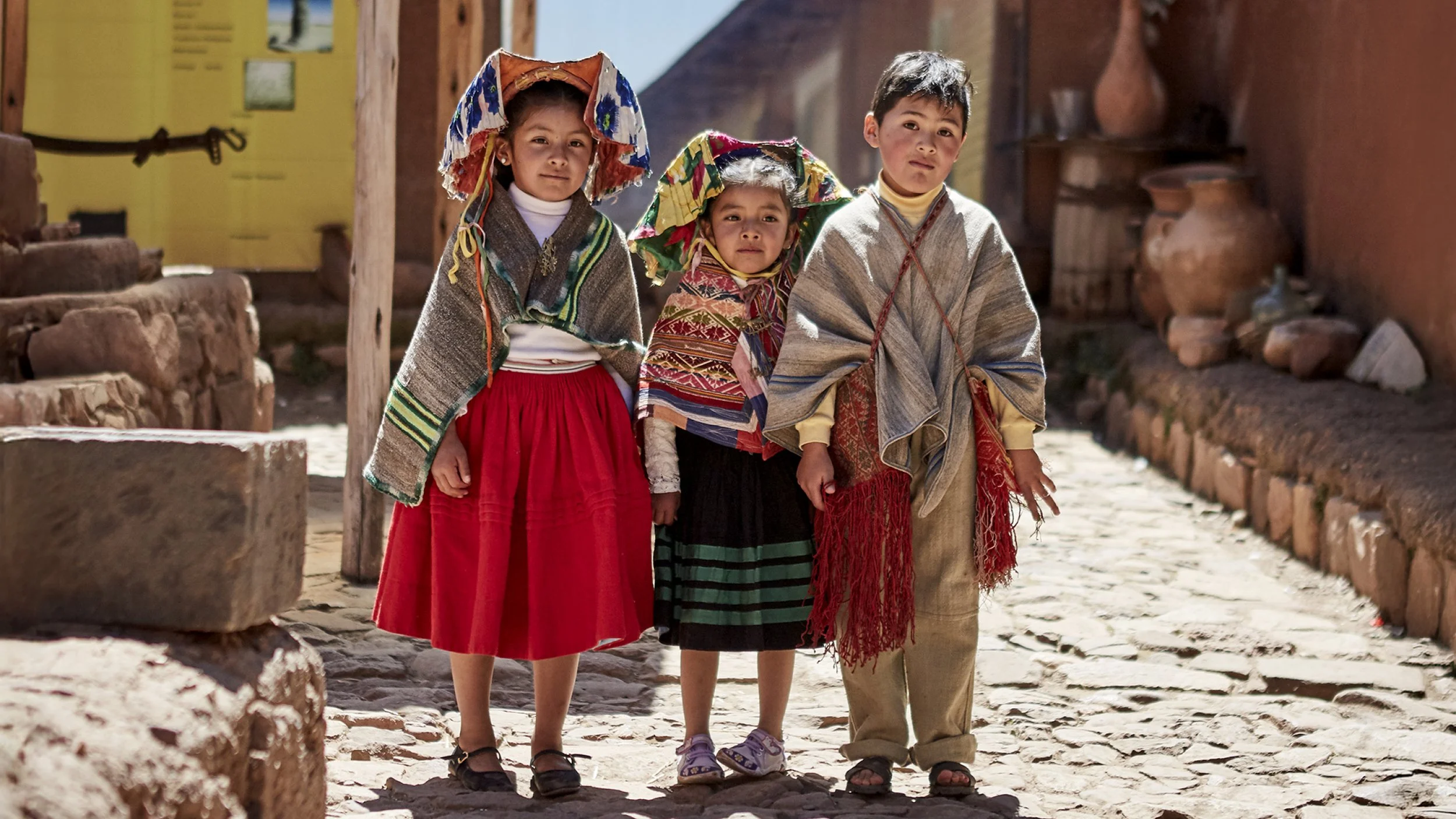
This question inquires how designing for regeneration touches on our deep, intergenerational connection to place. Scientist and Indigenous elder Robin Wall Kimmerer wrote a letter in 2020 inviting readers to embrace the land we live on as, “the residence of our more-than-human relatives, the dust of our ancestors, the holder of seeds, the makers of rain; our teacher.”⁵² In her best-selling book, Braiding Sweetgrass, she stresses the importance of regeneration for healing the environment as well as our relationship with the world—so our relationship is one that is reciprocal and rooted in gratitude.
The Power of Storytelling
The way in which we are connected to land and place is often best expressed through storytelling. Fashion has the potential to connect us to our environment, the land around us, our communities, and ourselves. Through the stories of the textiles, colors, and designs with which we dress ourselves, we have the potential to be connected to larger ecosystems of meaning that reach beyond trends and seasons.
Regenerating a deep connection to place through supporting local farmers, artisans, land, dyes, and practices is vital. Garments can be the vessels of memory, of healing, of community, and of connection to land, place, and self. When fashion tells a story, clothing does not become something easily disposable and replaceable. It becomes meaningful as an extension of who we are and the world we want to live in. What we wear reorients us toward land, seasonality, and ecological intimacy. By recognizing that connection, clothing becomes a story of place and a map of belonging, not just a product.
“Unlike much of Western fashion, Brazilian designers are challenging the traditional purpose of garment creation; they strive to bring something meaningful and rich with a personal narrative embodied within a garment. With an individual aesthetic, designers are originating more than apparel, they are creating stories full of culture and history.”⁵³
Beatriz Tourinho, “Why Are Brazilian Sustainable Fashion Brands a Cultural Revolution?”
Fibershed: Designing for Bioregional Identity
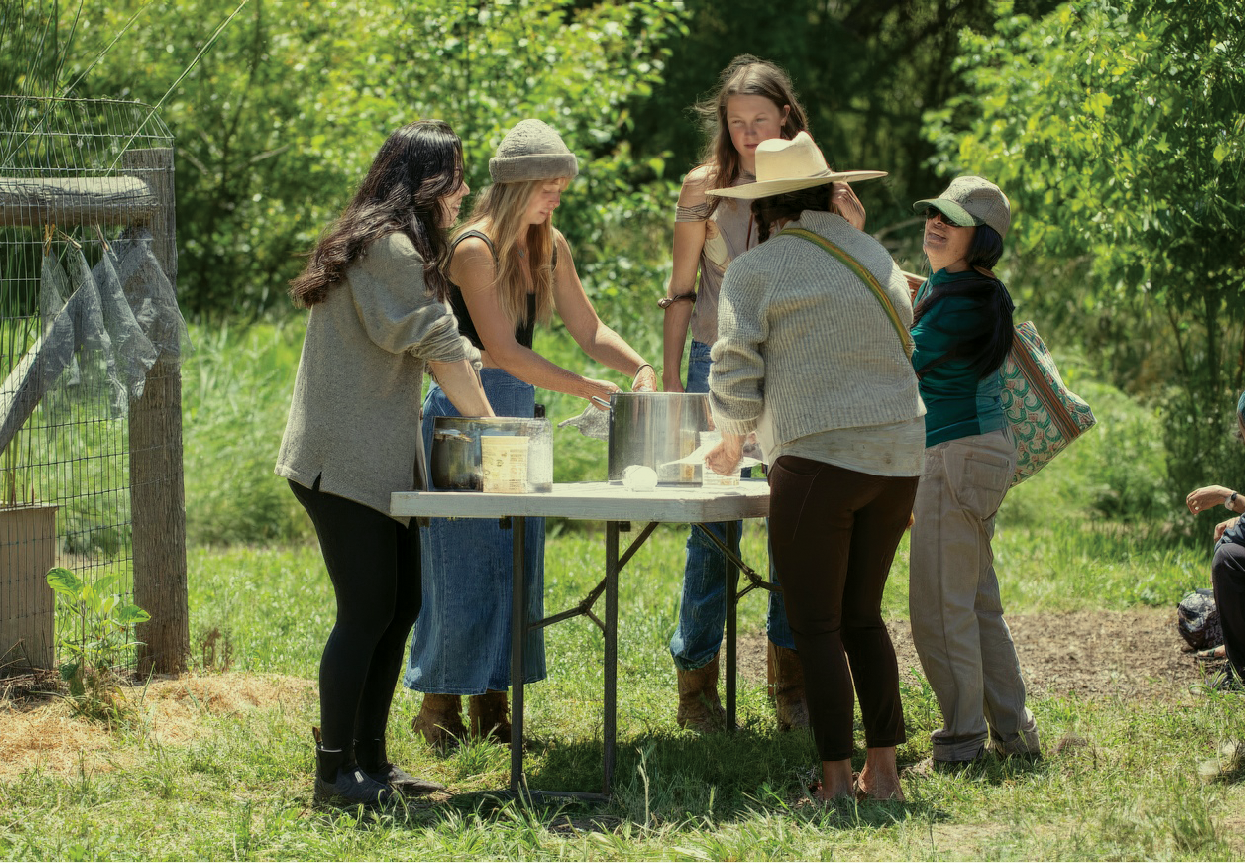
Fibershed reconnects fashion to place by creating hyperlocal fiber and dye systems. Their Climate Beneficial program supports farming methods that sequester carbon while promoting grazing practices that restore grassland ecology, and their work on natural dye systems helps protect local water cycles and pollinator habitats. Fibershed also advocates for closed-loop systems, such as compostable garments that return to the land.
“The Fibershed concept first came to life in a year-long project to create textiles and clothing designs that would be sourced within a 150-mile radius of the project’s headquarters in San Geronimo, California. This required that all aspects of textile materials—fiber, labor and dye, be highly localized, as well as the design and labor in clothing manufacture.”⁵⁴
Andrea Swenson Dunlap, “Slow Clothes on the California Horizon: Fibershed”
These systems are designed not only for low carbon but to reawaken relationships between people, plants, and animals in a shared bioregion. In this model, ecosystems are not resources to extract from—they are collaborators and co-shapers of how materials are grown, processed, worn, and returned to the earth.
“Clothing contributes to the experience of building a true sense of belonging to a place. . . Textiles could become a decent, if not a perfect, reminder of our relationship to ecosystems.”
Rebecca Burgess, Fibershed⁵⁵